

LEBANON
BACKGROUND
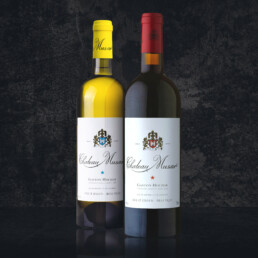
Lebanon is amongst the oldest wine producing regions dating back prior to 2686 BC and have had a significant impact on the art of preserving wine, being amongst the first to preserve their wine through the use of Amphoras. The two most notable vineyards in Lebanon are Chateau Ksara and Chateau Musar. Musar its not the typical wine of Lebanon, produced naturally the bottles are kept for several years before being released for sale.
Château Musar
Rouge (Gaston Hochar)
Chateau Musar Red made with Cabernet Sauvignon, Carignan, Cinsault, it’s fermented in cement vats and transferred into French barrels and left for one year. The wines are brought together, blended, and placed back in cement tanks for 12 months before bottling. The bottles are kept for further four years in the cellar of Chateau Musar before released, the whole process from harvesting its takes seven years.
Château Musar
Blanc (Gaston Hochar)
Musar White is a blend of indigenous grape varieties Obaideh and Merwah, related to Chardonnay and Semillon. Obaideh vineyards have stony and chalky soil, while the Merwah vineyards have calcareous gravels. The process for the White its slightly different from the red, is fermented and left in French oak barriques for 9 months then blended, bottled, and left for six years before released.
"CHAMBERTIN DOMAINE ARMAND ROUSSEAU, GRAND CRU - A BOUQUET JUST WAITING TO BURST OUT. MARVELLOUSLY VIBRANT FRUIT ON THE PALATE. STUNNING IN ITS ABILITY TO FILL THE MOUTH WITH FLAVOUR."
Sazan Allija - DeVyne Co-Founder / Director

Spanish
BACKGROUND
Spanish wine is widely viewed to have started to be commercially exported under Roman Rule, with demand growing steadily over the following centuries. By the 17th century, Spain experienced significant growth in exports which was further bolstered during the Phylloxera plague, with French wine production impacted most severely, many counties, including France turned to Spanish wine. Nowadays after perseverance and passion towards the terroir and vines we can taste some of the iconic grapes such as Tempranillo, Garnacha, Monastrell, Verdejo, and Albarino.
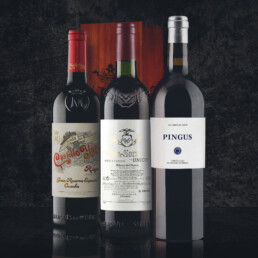
Dominio de Pingus
Pingus
Danish-born oenologist Peter Sisseck, arrived in Spain 1993, where he discovered the new home for Pingus in the Ribera del Duero region. The first vintage released was in 1995, reviewed by the Wine Advocate as one of the best Tempranillos. Having aged his early vintages in new barriques, gradually Peter abandoned this technique for the later vintages, producing a limited number of cases every year.
Vega Sicilia
Unico
Founded in 1859 by Eloy Lecanda, the property was bought in the early 1900s by the Herrero brothers. In that same period the famous winemaker Domingo Garramiola Txomin started working with Vega Sicilia introducing the Bordeaux system of ageing wine in barriques. His first vintage was the 1915 Vega Sicilia Unico. No less than 10 years is required for this complex ageing process, with the wine spending six years in wood followed by four in the bottle.
Marqués de Murrieta
Castillo Ygay Gran Reserva Especial Tinto
Owned by the Luciano de Murrieta y García-Lemoine family from 1852 it was then passed to the Cebrián-Sagarriga family in 1983. The renowned Castillo Ygay, made from Tempranillo and Mazuelo, has its own unique process of ageing, with the Tempranillo being left for three years in American oak and the Mazuelo for three years in new French oak. Once blended the wine spends one year in concrete and then three years in bottles before being released.
"CHAMBERTIN DOMAINE ARMAND ROUSSEAU, GRAND CRU - A BOUQUET JUST WAITING TO BURST OUT. MARVELLOUSLY VIBRANT FRUIT ON THE PALATE. STUNNING IN ITS ABILITY TO FILL THE MOUTH WITH FLAVOUR."
Sazan Allija - DeVyne Co-Founder / Director
Italian
BACKGROUND
Settled in south Italy the Greek exported their art of wine growing to Italy and impressed by the mild climate perfect to grow and produce wine they started to call Italy Oenotria. The Romans improved the technique used by the Greek and the demand for wine increased rapidly, the wine was consumed at every meal and because the alcohol content was stronger, they had to mixed with water. The Romans discovered that if the wines were kept in closed containers improved with age, becoming the first to store it in wooden barrels. Italy grows and use more then 400 types of grapes to produce its wines, and the most wanted wines are Barolo, Barbaresco, Amarone, Chianti Classico, Brunello di Montalcino and all the Super-Tuscan.
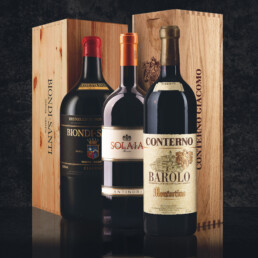
Giacomo CONTERNO - RISERVA
Barolo Riserva Monfortino
Giovanni Conterno established the winery at the beginning of 1900 near Monforte d’Alba Piemonte, and until 1920 the wine was sold in demijohns or barrels. Giacomo Conterno, Giovanni’s son, decided to differentiate the method of producing Barolo by ageing the wine after bottling. Barolo Riserva Monfortino is made from Nebbiolo grapes, that have been left to macerate in their skins for five weeks before ageing for seven years in wooden barrels, producing around 580 cases per vintage.
Antinori
Tenuta Tignanello 'Solaia'
Tenuta Tignanello estate is in the heart of Chianti Classico. The sunniest part of the Tignanello’s hillside is home to the Solaia vineyard, with soils that originated from marine marlstone from the Pliocene period, rich in limestone and schist. Solaia boasts the finest Cabernet Sauvignon, Cabernet Franc, and Sangiovese grapes from its namesake vineyard. The estate’s two signature wines, Solaia and Tignanello, are produced from these vineyards and have been defined by the international press as “among the most influential Super-Tuscan in the history of Italian viticulture”.
Biondi-Santi
Brunello di Montalcino
The most iconic Brunello di Montalcino wine for Brunello lovers is the Biondi-Santi. It all started in 1867 with Clemente Santi producing Moscadello wine. Biondi-Santi Riserva 1891 is considered to be its best ever vintage. Franco Biondi Santi strongly defended the traditional way of making Brunello, refusing to go with new barrels or oak, because Sangiovese is naturally rich in tannins and doesn’t need the strong tanning imparted by new oak. The winery produces three wines: Brunello Riserva, Brunello di Montalcino, and Rosso di Montalcino. Having been discontinued in 2010, in 2021 Biondi-Santi reintroduced the Topping-Up System of refilling the wine bottle with the same vintage to the required level and replacing the cork.
"CHAMBERTIN DOMAINE ARMAND ROUSSEAU, GRAND CRU - A BOUQUET JUST WAITING TO BURST OUT. MARVELLOUSLY VIBRANT FRUIT ON THE PALATE. STUNNING IN ITS ABILITY TO FILL THE MOUTH WITH FLAVOUR."
Sazan Allija - DeVyne Co-Founder / Director
French
BACKGROUND
France was a land without vines or wine until the arrival of the Greeks and romans. Monks maintained vineyards and conserved wine making knowledge and skills. France’s centuries-long reign as the top wine-producing country came to a sharp halt when cultivation was devastated by the spread of phylloxera across Europe from 1870 to 1908. After this crippling plague, in 1930 the French government introduced the wine classification system to minimise the threat posed by competing wine countries. Nowadays nearly every region of France produces wine and Bordeaux, Burgundy, Champagne, Loire valley are the top areas.
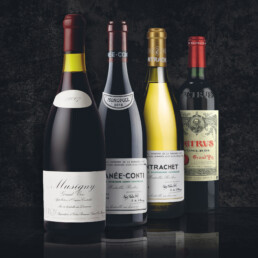
Burgundy Côte de Nuits Red - GRAND CRU
DOMAINE LEROY - Musigny
Established in 1868 by François Leroy owning Mersault Pommard, Chambertin, Musigny, Clos Vougeot, and Richebourg vineyards. In 1912 Henri Leroy joined the family business and in 1942 after acquiring 50% of the shares from his friend Henri, became co-owner of Domaine Romanée Conti, still today held by the Leroy family. Musigny from Domaine Leroy is one of the rarest wines under the radar for many collectors.
Burgundy Côte de Nuits Red - GRAND CRU
Romanée Conti
Medium garnet color, bricked throughout, much sediment. Rich and sweet nose of baked pie of stone fruits and berries, with an enormous mix of mints, tobacco pouch, damp redwood, beef broth in there. On arrival, low tannin and delicately low acidity.
Domaine de La Romanée-Conti
Montrachet Grand Cru
In 1200 the vineyard was operated by the Abbey of Saint Vivant in Vosne, it is believed that the vines were cultivated by the Romans giving them their name Romanée. In 1700 the Prince of Conti bought the vineyard giving his name Romanée Conti and not sharing a single bottle with anybody. The Duvault-Blochet family in 1800 started their journey, bringing to the market one of the most sought wines in the world. Since 1942 the Domaine has been co-owned by the de Villaine and Leroy/Roch families. The high demand for specific vintages and with the Domaine producing only 280 cases per year, makes Montrachet the most esteemed Chardonnay on the market.
Bordeaux Pomerol - Grand Vin
Château Pétrus - POMEROL
Bordeaux, France, Chateau Petrus owned by the Moueix family with 28 acres of vine Petrus produces 100% Merlot. In 1964 Jean-Pierre Moueix hired Jean-Claude Berrouet, oenologist and winemaker producing 45 stanning vintages. The vines are planted at the highest hill of Pomerol, producing only 30,000 bottles per year every wine enthusiast loves to have his Petrus case.